2026 Calendar With Week Numbers
The 2026 Calendar Just Got Easier: Why You Need Week Numbers
Forget scrambling to figure out what week it is. Seriously. We’ve all been there, right? Staring at a project deadline, or trying to schedule something, and you’re just like, “Is that next week? Or the week after?” It’s a headache nobody needs. That’s where having a calendar with week numbers for 2026 becomes less of a nice-to-have and more of a must-have. It cuts through the confusion like a hot knife through butter. Plain and simple.
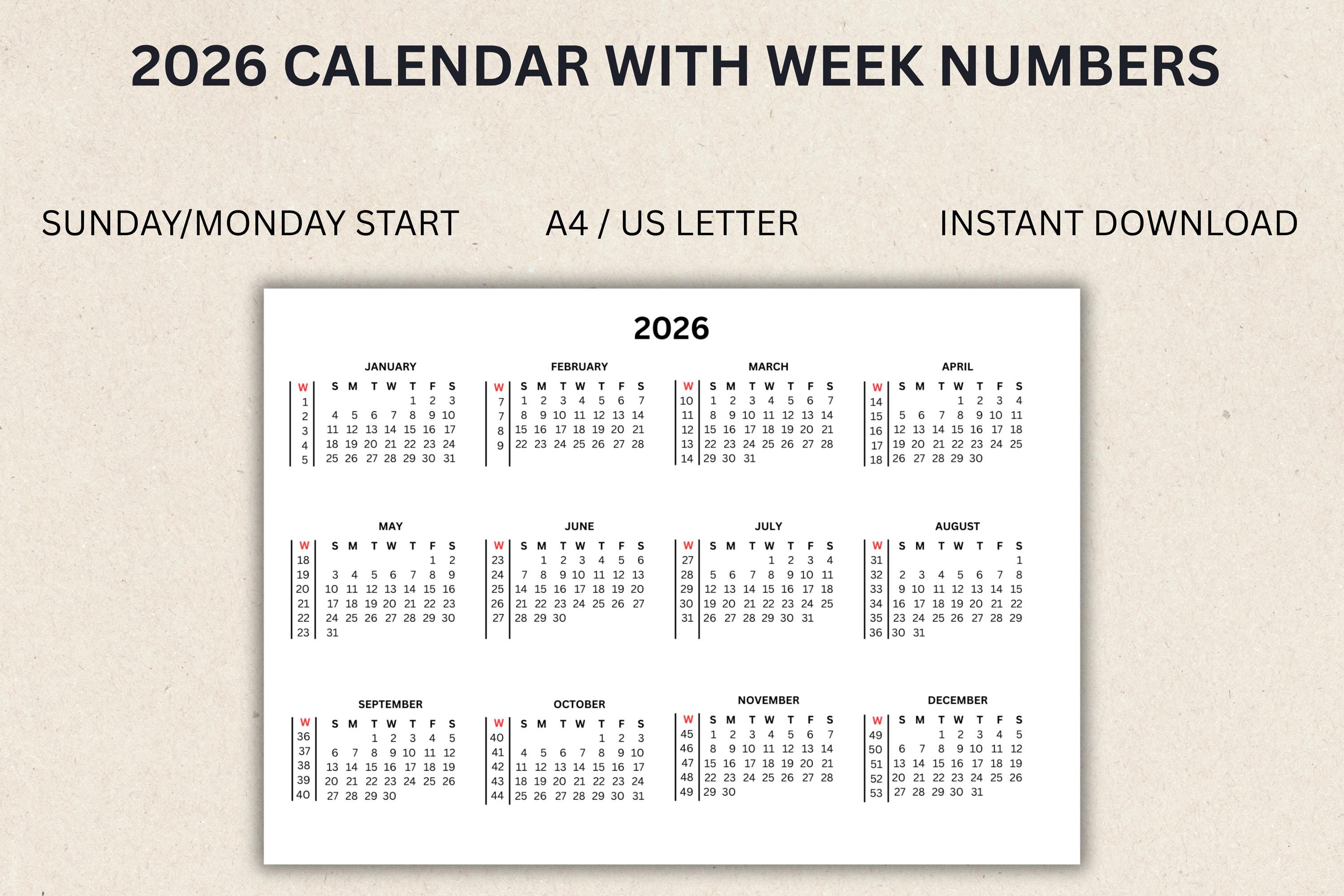
Source : etsy.com
Why Bother With Week Numbers Anyway?
Look, I get it. Some people think it’s overkill. “Just tell me the date!” they shout. But think about it. Businesses, especially, operate on a timeline that’s way more granular than just month-to-month. Plaing meetings, shipping schedules, project phases – they often get discussed in terms of “week 35” or “week 12.” It’s a universal language in a lot of industries. If you’re trying to coordinate with a supplier overseas, or even just your own remote team spread across different time zones, speaking in week numbers makes everything click way faster. It’s about efficiency, pure and simple. Less ambiguity, more action. You can finally ditch those awkward “uh, so, what week is that again?” conversations. Trust me, your colleagues will thank you.
Getting Your Hands On a 2026 Calendar With Week Numbers
So, where do you snag one of these magical plaing tools? It’s easier than you think. Lots of digital calendars already have this feature built-in. Google Calendar? Yep. Outlook? Totally. Apple Calendar? You bet. Just dig into the settings – usually under ‘Calendar settings’ or ‘View options’ – and toggle on ‘Show week numbers.’ Boom. Done. Easy peasy.
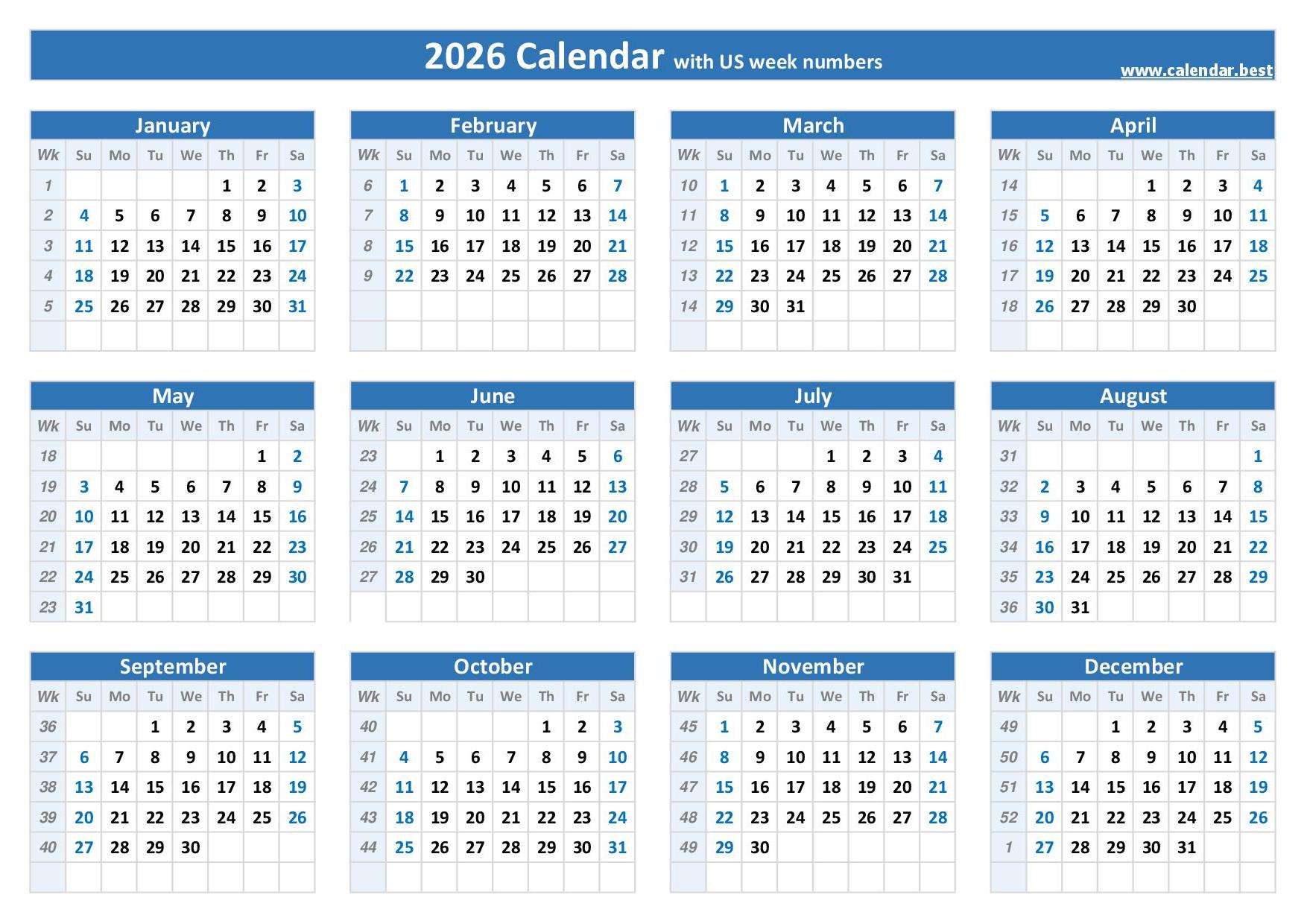
Source : calendar.best
But what if you’re old school? Or need something specific for printing? No problem. There are tons of great printable options out there. Sites like What Week Is It are fantastic resources. They’ve got you covered with clean, straightforward designs. You can find yearly calendars formatted perfectly for your desk or office wall. Just print it out, hang it up, and feel that immediate sense of order descending upon your life. Ah, bliss.
The International Standard: ISO 8601
Now, here’s a little nugget for you: there’s actually an international standard for this. It’s called ISO 8601. Most modern systems, the ones that are worth a darn anyway, follow this standard. Basically, week 1 of any year is the first week that contains at least four days of that year. Monday is typically considered the first day of the week. This might sound a bit technical, but knowing this helps explain why your calendar might start week numbering slightly differently than you expect. It’s all about that ISO 8601 standard. Understanding it means you won’t get caught off guard when week 1 starts a little later in January than you might have guessed. It’s the hidden logic behind your plaing tool.
Calculating Week Numbers: It’s Not Rocket Science (Usually)
While most of us will just use a pre-made calendar, sometimes you get curious. Or maybe you’re a developer needing to implement this. How is it calculated? Well, the ISO 8601 method is the most common. But there are variations. Some systems might consider Sunday the start of the week. Others might have different rules for what constitutes ‘week 1’ if January 1st falls on a particular day. For 2026, the first Monday of the year is January 5th. That means the very first week, Week 1, will start on January 5th. The Epoch Converter is a great place to play around with these calculations if you’re feeling adventurous. They have a dedicated page for 2026 week numbers where you can see it all laid out. It’s a neat little tool that shows you just how precise these systems can be when they’re set up correctly.
Spreadsheets: Your Best Friend for 2026 Plaing
For serious plaers, or anyone managing a team, a spreadsheet is often the go-to. And guess what? Many pre-made spreadsheet templates for 2026 come with week numbers already integrated. Think Excel or Google Sheets. You can find templates specifically designed for business plaing, project management, or just general organization. These often have columns for week numbers right alongside the dates. This makes visualizing your projects and deadlines incredibly straightforward. You’re not just looking at a list of dates; you’re seeing the flow of time laid out in neat, manageable chunks. It’s a powerful way to get a handle on your entire year. Need to see your Q3 goals? Just look at the rows for weeks 27 through 39. Done.
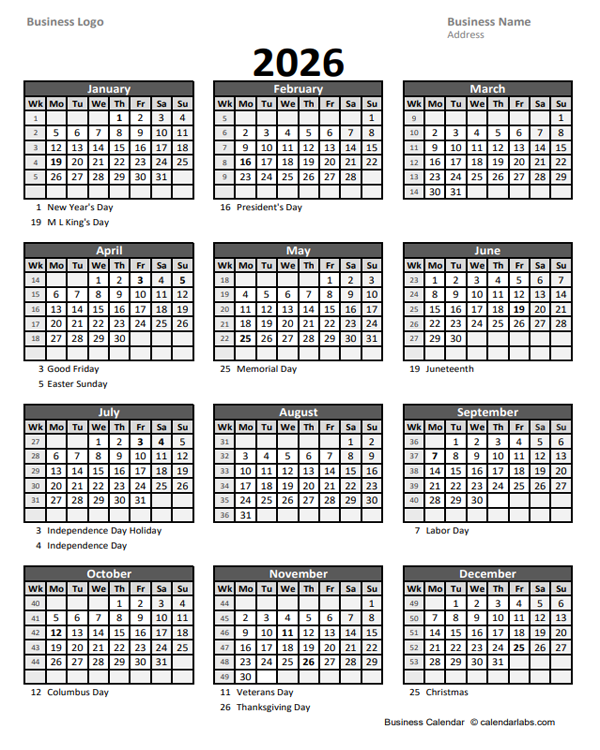
Source : calendarlabs.com
Beyond the Basics: Advanced Calendar Features
Okay, so we’ve covered the core benefit: clarity. But good calendars, especially digital ones, offer more. Think recurring events, color-coding, shared calendars for teams, and integration with other productivity apps. When you combine these features with the structure that week numbers provide, you’re looking at a serious upgrade to your organizational game. Imagine setting a recurring monthly meeting on the second Tuesday of every month, and seeing exactly which week number that falls into. Or sharing a project timeline with your team, where every milestone is clearly marked by its corresponding week number. It streamlines communication and ensures everyone’s on the same page. It takes the guesswork out of scheduling and turns it into a predictable, manageable process.
The 2026 Yearly Calendar: A Practical Tool
Ultimately, a 2026 calendar with week numbers is more than just a grid of dates. It’s a tool. A tool that helps you: get organized, improve communication, meet deadlines, and reduce stress. Whether you’re a student juggling classes, a freelancer managing multiple clients, or a business owner plaing for the future, having that extra layer of weekly organization is invaluable. It transforms abstract deadlines into concrete targets. It makes the vastness of a year feel more approachable, broken down into digestible weekly segments. So, next time you’re looking at a calendar, make sure it’s showing you the whole picture. Make sure it’s showing you the week numbers. Your future self, less stressed and more organized, will totally thank you for it.
FAQs About the 2026 Calendar With Week Numbers
How do I add week numbers to my Google Calendar for 2026?
Easy! Just open your Google Calendar on a desktop browser. Click the Settings gear icon, then select ‘Settings.’ Scroll down to the ‘View options’ section and check the box that says ‘Show week numbers.’ That’s it! You’ll see week numbers appear in the left-hand navigation panel. It’s a super simple way to get that extra bit of clarity.
Is there a standard for how week numbers are calculated?
Yes, there absolutely is! The most widely used standard is ISO 8601. It dictates that the first week of the year is the one containing the first Thursday of that year. This usually means Week 1 starts sometime in the first few days of January. It ensures consistency across different systems and countries, making global plaing much smoother. Keep it in mind!
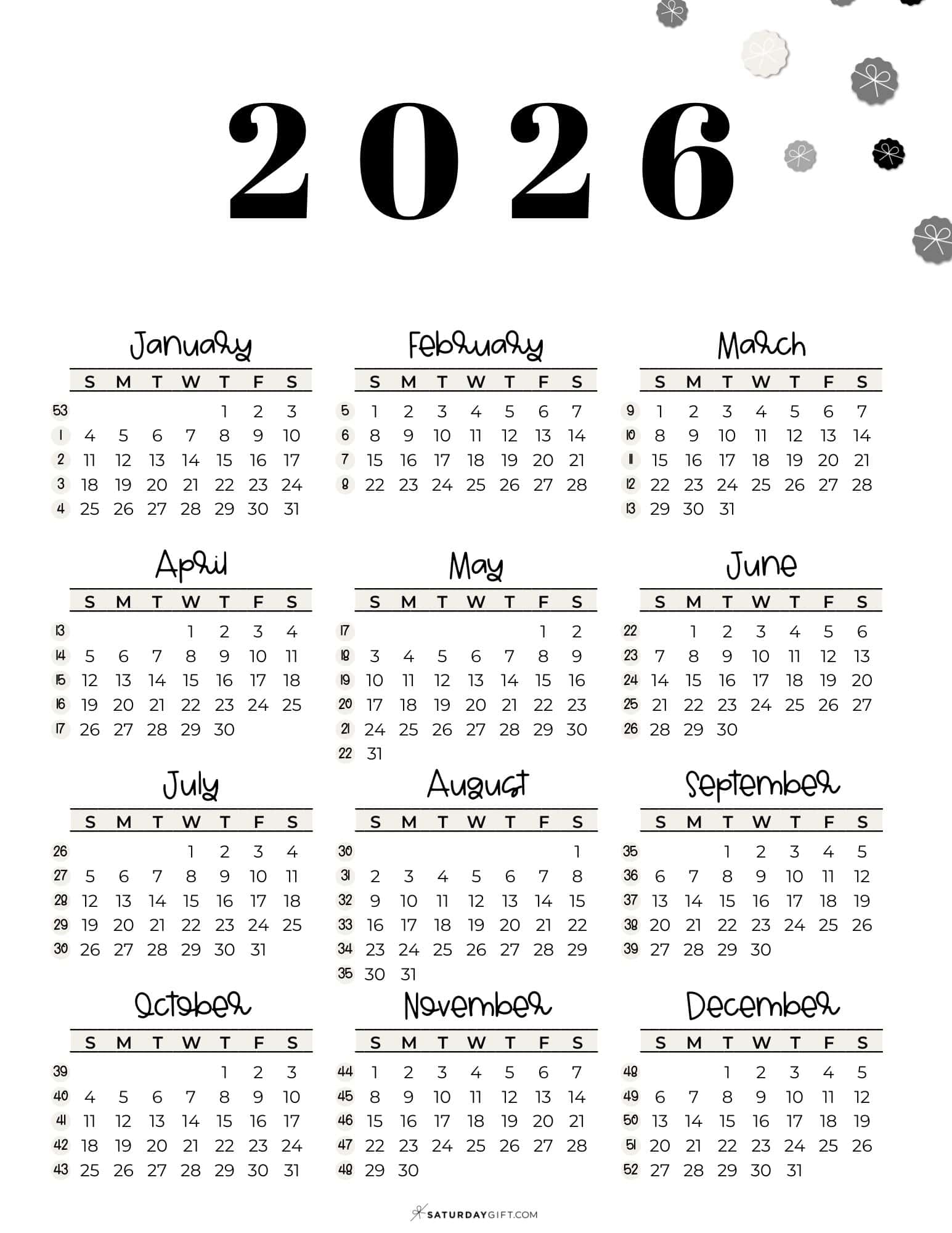
Source : saturdaygift.com
Where can I find a printable 2026 calendar with week numbers?
You’ve got options! Websites like Calendar.online offer downloadable templates. You can also search for “printable 2026 calendar with week numbers” on Google, and you’ll find plenty of free resources. Many business-focused sites offer Excel or PDF versions too. Just download, print, and you’re good to go for easy year plaing.
Will my Outlook calendar automatically show week numbers for 2026?
It depends on your settings, but yes, Outlook can show week numbers! Go to File > Options > Calendar. Scroll down to ‘Week numbers’ and check the box that says ‘Show week number(s) in the Date Navigator.’ This makes it super simple to see the current week number at a glance right in your calendar view. Give it a try!
Are week numbers the same in all countries for 2026?
Generally, yes, if they’re following the ISO 8601 standard. However, some countries might have slight variations or different conventions for when the week officially starts (Sunday vs. Monday). For most international business and digital plaing, sticking to the ISO standard is your best bet for consistency. It prevents confusion when working with global partners.
Frequently Asked Questions
How do I add week numbers to my Google Calendar for 2026?
Easy! Just open your Google Calendar on a desktop browser. Click the Settings gear icon, then select ‘Settings.’ Scroll down to the ‘View options’ section and check the box that says ‘Show week numbers.’ That’s it! You’ll see week numbers appear in the left-hand navigation panel. It’s a super simple way to get that extra bit of clarity.
Is there a standard for how week numbers are calculated?
Yes, there absolutely is! The most widely used standard is ISO 8601. It dictates that the first week of the year is the one containing the first Thursday of that year. This usually means Week 1 starts sometime in the first few days of January. It ensures consistency across different systems and countries, making global plaing much smoother. Keep it in mind!
Where can I find a printable 2026 calendar with week numbers?
You’ve got options! Websites like Calendar.online offer downloadable templates. You can also search for “printable 2026 calendar with week numbers” on Google, and you’ll find plenty of free resources. Many business-focused sites offer Excel or PDF versions too. Just download, print, and you’re good to go for easy year plaing.
Will my Outlook calendar automatically show week numbers for 2026?
It depends on your settings, but yes, Outlook can show week numbers! Go to File > Options > Calendar. Scroll down to ‘Week numbers’ and check the box that says ‘Show week number(s) in the Date Navigator.’ This makes it super simple to see the current week number at a glance right in your calendar view. Give it a try!
Are week numbers the same in all countries for 2026?
Generally, yes, if they’re following the ISO 8601 standard. However, some countries might have slight variations or different conventions for when the week officially starts (Sunday vs. Monday). For most international business and digital plaing, sticking to the ISO standard is your best bet for consistency. It prevents confusion when working with global partners.

Scanzin
Scanzin is a digital planner and template designer dedicated to helping people reclaim their time. With a focus on practical layout design, Scanzin creates printable calendar templates that simplify daily scheduling and long-term planning.